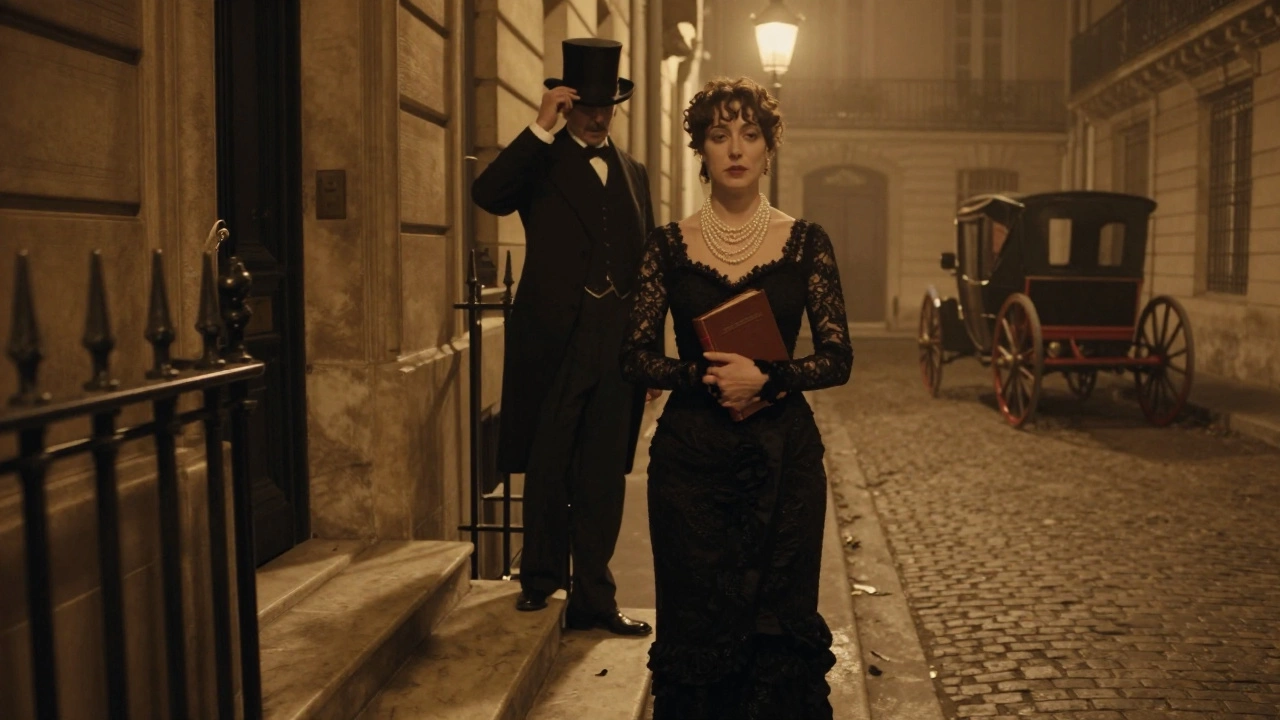
In the dim gaslight alleys of 19th-century Paris, women like Mary Baker and Alta Roberts didn’t just survive-they commanded spaces where power, money, and desire collided. Their stories aren’t found in textbooks, but in police logs, court transcripts, and the whispered memories of those who crossed their paths. These weren’t random figures in a moral panic; they were strategic, savvy, and often more financially independent than the wives of the men who condemned them. Mary Baker, an American expat who moved to Paris in 1872, turned her charm and fluency in English into a lucrative business. She didn’t advertise in newspapers. She didn’t need to. Her reputation traveled through elite salons and private clubs, where diplomats, artists, and industrialists knew exactly where to find her. Her clients paid in gold, not promises. And yes, if you’re curious about how modern escorting in Paris evolved from these roots, you can read more about escort girl patis today-though the risks, rules, and rewards have changed dramatically.
Who Were Mary Baker and Alta Roberts?
Mary Baker wasn’t just a name on a ledger. She was born in Boston in 1847, moved to Paris after a failed marriage, and by 1875 had her own apartment on Rue de la Paix. She dressed like a lady, spoke like a scholar, and never touched alcohol in front of guests. Her clients weren’t looking for cheap thrills-they wanted discretion, intellect, and control. She kept meticulous records of her earnings, which, adjusted for inflation, averaged the equivalent of $12,000 per month in today’s dollars. She also hired two maids, paid taxes under a false name, and invested in real estate in Montmartre.
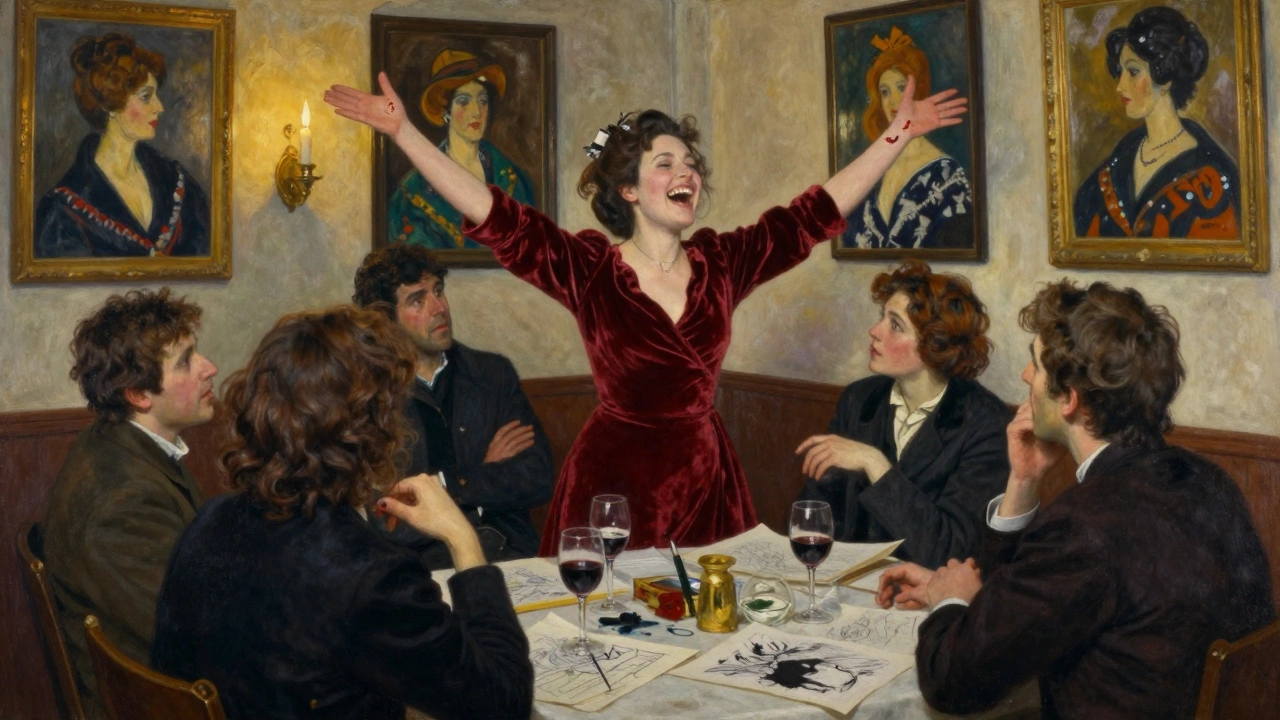
Alta Roberts, on the other hand, came from a different world. Born in New Orleans in 1851, she was sold into a brothel at 14. By 21, she had escaped to Paris and rebuilt herself. Unlike Baker, Roberts didn’t hide her past. She wore bold colors, laughed loudly, and hosted open salons for writers and musicians. Her clients included poets like Verlaine and painters like Toulouse-Lautrec. She didn’t charge by the hour-she charged by the night, and only to those who could bring her something new: a poem, a sketch, a story. She once said, “I don’t sell my body. I sell the silence between us.”
The Business of Pleasure in the Belle Époque
Paris in the 1880s was a city of contradictions. The upper class preached morality while privately hiring women like Baker and Roberts. The police turned a blind eye-as long as the women stayed out of public view and paid their “protection” fees. There was no legal framework for escorting back then, but there was a clear code. Women who kept clean apartments, avoided public drunkenness, and didn’t cause scandals were left alone. Those who screamed in the streets or refused to pay bribes vanished into the prison system.
Many of these women operated like small businesses. They had contracts, written agreements, even refund policies. One known ledger from 1883 shows a client being charged extra for “emotional support” after a failed political coup. Another entry notes a refund given because the client “did not appreciate the French wine.” These weren’t just sex workers-they were service providers in a high-stakes, unregulated market.
How They Outsmarted the System
Both Baker and Roberts understood the power of perception. Baker dressed like a widow of means, carried a French-language book everywhere, and never spoke about her past. Roberts wore her scars openly, turned them into art, and used her notoriety as leverage. They both avoided romantic entanglements. One woman once said, “Love is a debt you can’t repay. I only take cash.”
They used aliases, rented rooms under false names, and kept their money in Swiss banks. Baker had a second apartment in Lyon, just in case. Roberts had a network of women who would hide her if the police raided. Neither trusted lawyers. Neither trusted men in uniform. They trusted their instincts, their networks, and their ability to read a room.
The Legacy They Left Behind
Neither woman lived to see the 20th century. Baker died of pneumonia in 1891 after refusing a doctor’s visit. Roberts disappeared in 1895-some say she left for Buenos Aires, others say she was buried in an unmarked grave in Montparnasse. But their influence didn’t die with them.
Modern sex work in Europe, from escorting paris to the discreet services of escortegirl paris, still echoes their tactics: discretion over visibility, professionalism over spectacle, and autonomy over dependency. The internet changed the tools, but not the truth: women like Baker and Roberts knew that control over your body, your schedule, and your earnings was the only real power you could hold.
Myths vs. Reality
There’s a romantic myth that these women were tragic victims. That’s not true. Many were survivors. Some were opportunists. A few were brilliant. They didn’t wait for permission. They didn’t ask for pity. They built systems where none existed.
Today, people still confuse sex work with trafficking. But Baker and Roberts didn’t get trafficked-they negotiated. They didn’t get exploited-they exploited the system. They charged more than their competitors because they offered more: intelligence, safety, and silence.
Modern escorts in Paris still face stigma, but they also have tools Baker and Roberts could only dream of: encrypted messaging, digital payments, and client reviews. The risks are different now, but the core need remains the same: to be seen as human, not a commodity.
What Changed? What Didn’t?
Back then, a woman had to be invisible to be safe. Today, she has to be visible-but only on her terms. The internet gave her control over who sees her, when, and how. But the old dangers still linger: police raids, blackmail, and public shaming.
The biggest difference? Today’s sex workers have movements. Organizations. Legal advocates. In 2020, France passed a law decriminalizing clients, not workers-something Baker and Roberts would have fought for with their last breath.
They didn’t have hashtags. They didn’t have YouTube channels. But they had something more powerful: agency. And that’s what still matters today.